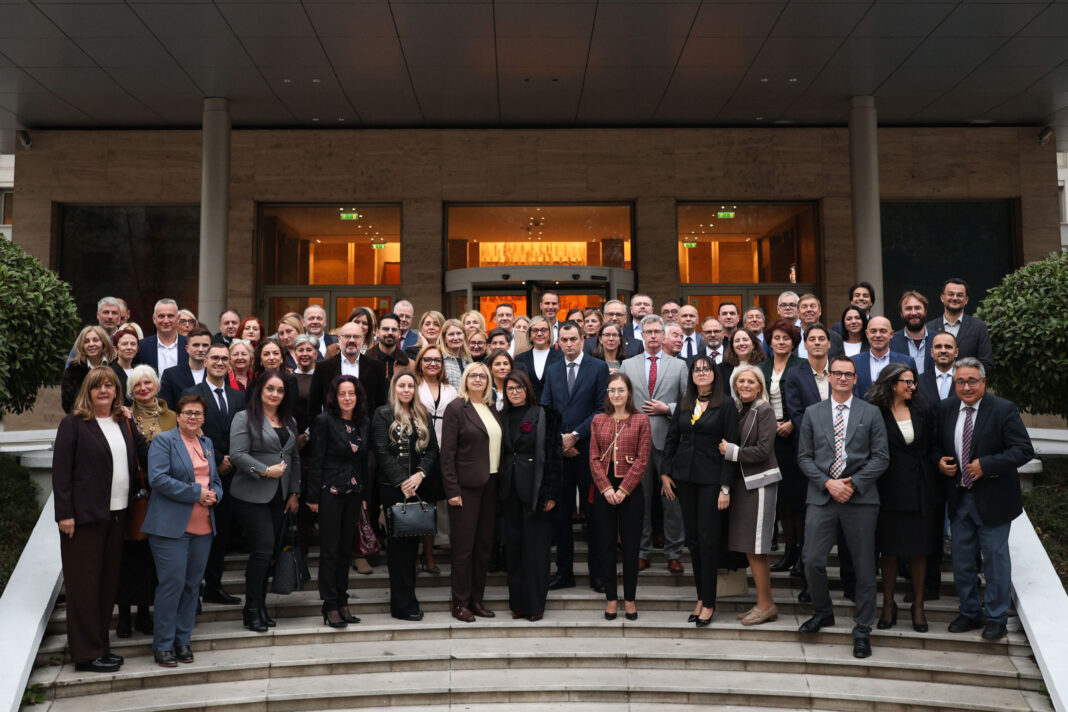
More than 30 prosecutors specializing in environmental crime attended an international conference organized by the Prosecutors Association of Serbia (PAS), in cooperation with the European Network of Prosecutors for the Environment (ENPE), on October 29 and 30.
As the conference was organized just four days after snap parliamentary elections that resulted in a change of government, its topic and focus were significantly shaped by this major social shift. Not only the journalists were interested in the actions of prosecutors at this particular juncture within the context of this change but the topic also featured in the opening remarks delivered by representatives of Embassies and international organizations.
In a statement issued on the first day of the Conference as well as in the “PAS in the Media” section, you can read comments from PAS representatives regarding current developments within the public prosecution organization.
The Conference was also dedicated, among other things, to the 25th anniversary of the Prosecutors Association of Serbia (PAS). To mark the occasion, a short film covering a quarter century of the Association’s work was screened. The film is available on our YouTube channel.
Environmental crime and changes in Serbia – the focus of introductory speeches
“Society in Serbia is on the threshold of change, and whether these changes can be implemented quickly depend on public prosecutors,” said Lidija Komlen Nikolić, President of the PAS Presidency, welcoming the participants. Having in mind the significant milestone, she added that for a quarter of a century, the Association has advocated for the independence, as well as the personal and professional integrity of prosecutors.
She also pointed out that acts against the environment, the main theme of the conference played an indirect role in social changes in Serbia, since the defense of nature served as one of the key issues that triggered waves of civic protests.
During the introductory session of the conference, Jasmina Stanković, Public Prosecutor at the Supreme Public Prosecutor’s Office and an elected member of the High Prosecutorial Council emphasized that the right to a healthy environment is a human right and that environmental crime is a global problem.
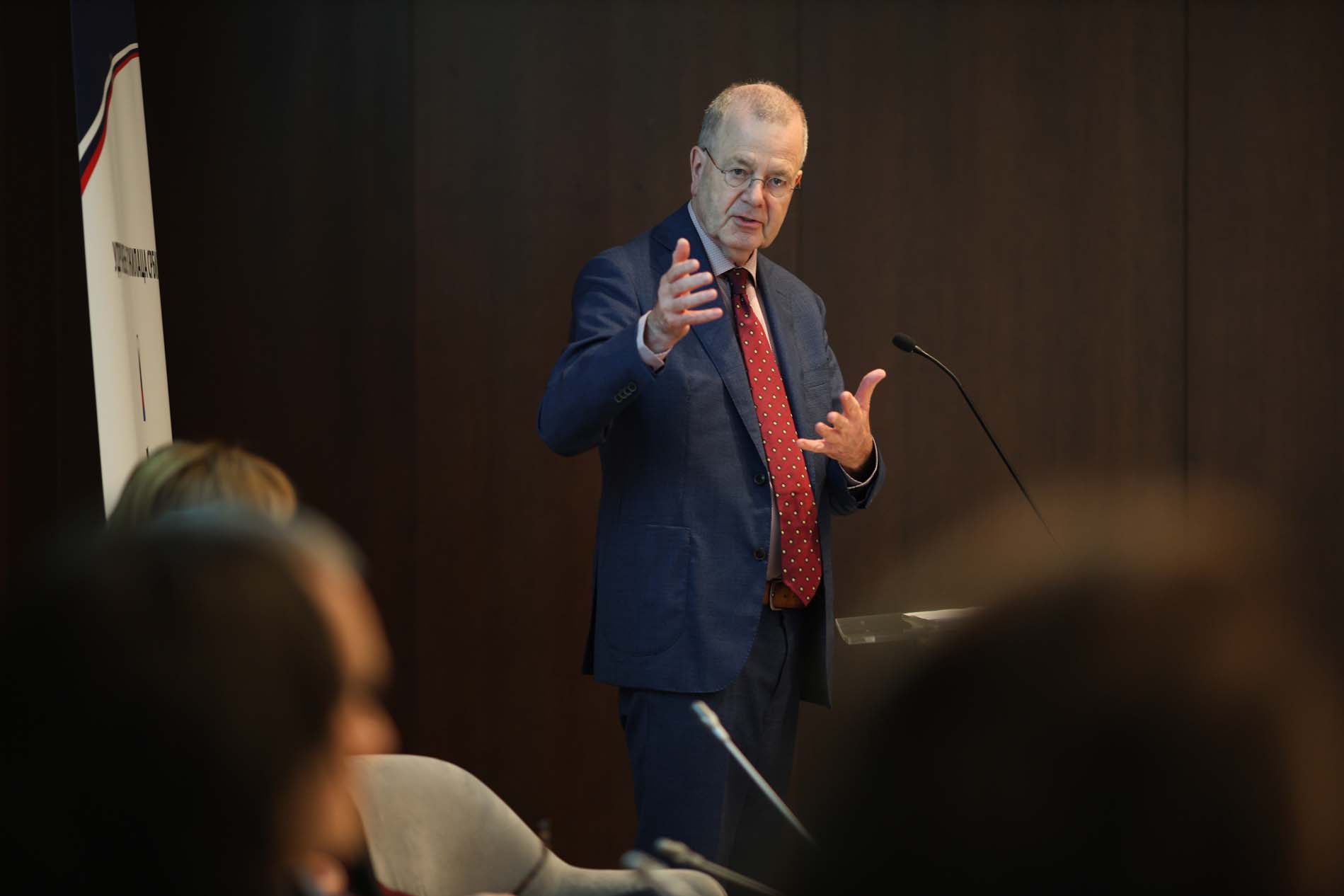
Rob de Rijck, President of the European Network of Prosecutors for the Environment, expressed his gratitude that the Association chose environmental crime as the theme for its anniversary conference. He noted that, even in many European countries, criminal protection of the environment remains on the periphery of the justice system.
“Yet criminal protection of environment is fundamental to our life, to the protection of our physical environment, our air, and our land. It constitutes a human right recognized as such by the European Court of Human Rights and is significant not only for humanity but for nature itself,” said Rob de Rijck.
Charlotte Sammelin, Ambassador of the Kingdom of Sweden, a country that supports the PAS project “Greening Justice: Legal Protection of the Environment” noted the changing political circumstances in Serbia and emphasized that, in order to prevent environmental crime, it is essential that prosecutors are able to investigate and prosecute such offenses impartially, professionally, and without any other influence.
Martijn Elhersma, Ambassador of the Kingdom of the Netherlands, highlighted the long-standing cooperation between PAS and the Dutch Embassy, noting that the rule of law is a key element of democracy. “Without the rule of law, there is no democracy. Over the past two years, the citizens of Serbia themselves have demonstrated that the rule of law is important to them, and I believe they will serve as an example for other countries in Europe,” said Ambassador Elhersma.
Mario Puzo, Head of the Rule of Law and Human Rights Department at the OSCE Mission to Serbia which also supports our “Greening Justice” project pointed out that environmental crimes are becoming a significant issue across Europe; they impact public health and the economy, and very often constitute a form of organized crime.
At the start of the first panel, titled “The Position of Public Prosecutors and Independence in Prosecuting Environmental Crimes,” the moderator, journalist Ljubica Gojgić, highlighted a key topic of the day: the decision by the Supreme Public Prosecutor’s Office to establish a commission to review the work of all 87 public prosecutor’s offices in Serbia.
One of the speakers on this panel, Goran Ilić, a prosecutor at the Supreme Public Prosecutor’s Office and Honorary President of the Prosecutors Association of Serbia (PAS), who also serves as the chair of this Commission briefly commented: “The Commission’s task is to determine whether any prosecutors, acting under political pressure, violated human rights for what there is widespread public suspicion. We will strive to determine, in this intense atmosphere, whether there have been mass human rights violations,” he stated.
For the full discussion on this topic, including insights from colleague Predrag Milovanović, an elected member of the High Prosecutorial Council (HPC) and Lidija Komlen Nikolić, please watch the recording of the first panel on our YouTube channel.
What about practice and legislation in Serbia and Europe?
One of the participants in the first thematic panel was Mariarosaria Guglielmi, President of the European Association of Judges and Prosecutors for Democracy and Freedoms (MEDEL) and European Prosecutor for Italy. She stated that prosecutors dealing with environmental crime should act as promoters of human rights, conducting investigations strictly in the public interest, and emphasized that specialization and coordination are essential for such investigations and prosecutions. “It is important to share information and knowledge in this field, as we are dealing with cross-border crime,” she explained.
Prosecutor Guglielmi commended the PAS for its courageous work and its role in safeguarding the independence of prosecutors throughout its 25 years of work. Not to forget that PAS has been a member of the MEDEL Association since 2012.
Addressing domestic prosecutorial practice regarding environmental crime, prosecutor Ilić stated: “In Serbia, we currently have no proceedings against major polluters; this is a problem, primarily due to the possibility of so-called ‘civil settlements.’ After all, major cases serve not only to ensure criminal law protection but also to provide for civil compensation.”
French prosecutor Jean-Philippe Rivaud, Vice-President of the ENPE, affirmed that environmental crime cannot be a matter solely for national legislation. He says this type of crime as one of the greatest challenges for the judicial system, as it often involves acts containing elements of organized crime, activities that generate significant economic gain and leverage political influence. Prosecutor Rivaud also encouraged his colleagues to consult a guide published last year by the United Nations Office on Drugs and Crime (UNODC), which addresses the issue of environmental crime.
Hazardous Waste in Novi Sad and birds in Belgrade
For over 20 years, PAS has been engaged in the criminal-law protection of the environment and in raising awareness among prosecutors regarding the importance of this issue, noted Komlen Nikolić.
“In Serbia, there are specialized prosecutors for this type of crime who have undergone relevant training. The challenges lie in securing evidence, coordinating with environmental and other inspection bodies, and enforcing decisions,” she explained, citing a case handled by the Basic Public Prosecutor’s Office in Novi Sad, in which a legal entity was fined 4.5 million dinars for the illegal storage of hazardous waste. However, the judgment was never enforced because, in the meantime, the legal entity entered bankruptcy proceedings.
At the end of this panel, the discussion also touched upon a recent incident that drew the attention of Belgrade residents: the installation of a billboard on the Palace Albania building, which endangered the nests of rare birds. We learned at the conference that a prosecutor from the Basic Public Prosecutor’s Office in Belgrade has requested a report from the Institute for Nature Conservation regarding the number of birds perished during the incident; the prosecutor is also awaiting reports from the police and the City of Belgrade to identify who installed the billboard, and expects to initiate legal proceedings soon.
Colleagues from Sweden and Italy outlined specific challenges encountered in the prosecution of such criminal offenses during a second expert panel, which focused on evidence collection, digital evidence, and links to organized crime.
Svetlana Nenadić, a member of the PAS and a prosecutor at the First Basic Public Prosecutor’s Office in Belgrade, stated that there are several European documents addressing this subject matter to which prosecutors can refer such as the EU Directive on the protection of the environment through criminal law, the Opinion of the Consultative Council of European Prosecutors, and the case law of the European Court of Human Rights.
Specialized prosecutors in Sweden, artificial intelligence as an investigative tool in Italy and training programs for prosecutors from across Europe
We gained a lot of useful information from our colleague Lars Magnusson, Vice-President for International Relations at ENPE and a Senior Public Prosecutor within the National Unit for Environmental Crimes at the Swedish Prosecution Authority.
“At the beginning of the 2000s, Sweden introduced specialized environmental prosecutors and established a national unit dedicated exclusively to these types of cases. After the specialization, the rate of criminal prosecution nearly doubled,” he said. The expertise possessed by specialized environmental prosecutors in Sweden enables them to analyze corporate structures and financial statements, allowing for a more effective determination of liability for legal entities.
Very specific advice also came from Italy, from colleague Pietro Molina, public prosecutor at the Italian Supreme Public Prosecutor’s Office, who noted that his country had taken two key steps: establishing the criminal offense of organized illegal waste trafficking, and incorporating major environmental crimes into the Penal Code.
“It is crucial that there is a coordination among various institutions; this coordination must be horizontal, between prosecutor’s offices as well as vertical involving judicial bodies, the police, environmental protection agencies, and other public authorities,” said Mollina. He also noted that artificial intelligence tools can assist in investigations and are increasingly being used in this field.
The Academy of European Law organizes numerous training sessions on the prosecution of environmental crimes, and prosecutors from various countries have shown interest in a range of related topics.
“The most frequent training topics relate to waste, illegal wildlife trade, illegal logging and water-related criminal offenses,” said Dr. Luisa Cortat, Deputy Head of the European Public Law Section at the Academy of European Law.
The first day of the conference was concluded with a panel featuring Professors from the Faculty of Mining and Geology at the University of Belgrade, Prof. Dr. Vladimir Živanović and Dr. Nebojša Atanacković as well as the Head of the Legal Department of the Irish Environmental Protection Agency, who is also a member of the ENPE Board.
How to Prove Pollution and why Cooperation Between Prosecutors and the Academic Community Is Important?
Professor Živanović discussed the difficulty of proving groundwater pollution, noting that the mere detection of a pollutant is insufficient to establish liability. “To establish liability, it is necessary to identify the source of the pollution, the manner in which the pollutants spread, and their impact on water sources,” he stated.
David Smith from the Irish Environmental Protection Agency spoke about a major case of illegal waste disposal in Ireland, which led to years of legal proceedings and a two-year prison sentence for a company director. He estimated that the costs of remediating the site reached at least 60 million euros.
The final panel was moderated by our colleague Branislava Vučković, President of the PAS Assembly, who emphasized that it is crucial for prosecutors handling such cases to understand how to prove these criminal offenses and because of that, cooperation with the academic community is essential.