
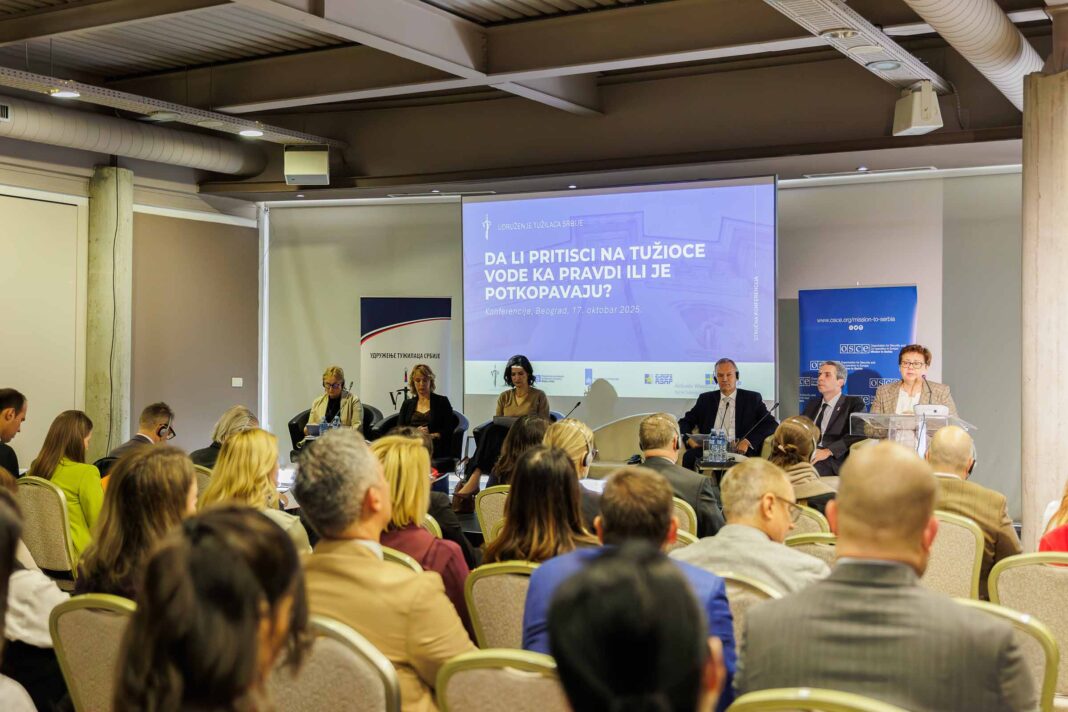
Prosecutors are being pressured from all sides, from high-ranking state officials, media, to citizens and various interest groups. Although the Law and the Constitution provide mechanisms for protecting the independence of prosecutors, they are not sufficiently used. The impact on the rule of law, with the rise of populism in the world, is a visible phenomenon in all societies around the world and is not only specific to Serbia.
These are the main insights of the annual conference of the Public Prosecutors Association of Serbia (PAS), held on October 17, 2025, which was also attended by colleagues from abroad, prosecutors, lawyers and former judges, professionals who are well acquainted with the legal systems of their countries and their weaknesses.
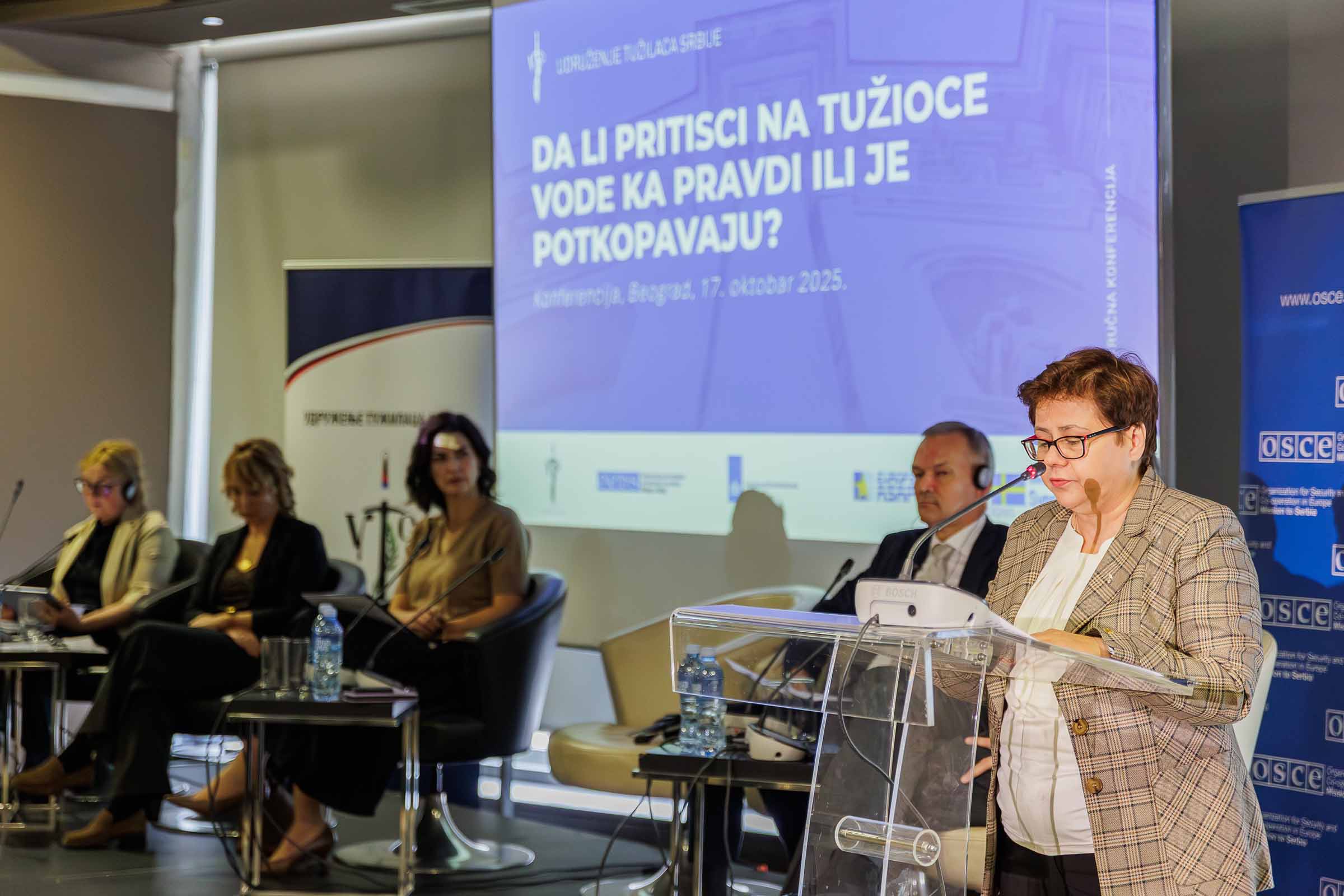
This year, the conference was also focused on “undue influence” on prosecutors as a phenomenon that is a constant in the prosecutorial organization and against which we have not yet found an effective mechanism. That’s why the title of the conference “Does pressure on prosecutors lead to justice or undermine it” should be understood as a rhetorical question and an incentive for reflection on this topic.
Lidija Komlen Nikolić, President of Presidency of the PAS and Prosecutor of the Appellate Prosecutor’s Office in Belgrade, opened the conference and openly pointed out that pressure on prosecutors comes from all sides. “External pressure has been intensified from the highest state officials, through citizens, and recently from the media. Pressure within the public prosecutor’s organization is also real,” she said.
From inappropriate statements to threats and intimidation
“The way of expressing dissatisfaction with the work of the prosecutor’s office has crossed the lines, primarily of decency, and in some cases direct threats are being made to public prosecutors and judges, which has led us from pressure to committing criminal acts,” she recalled in her introductory address, emphasizing that since the fall of the canopy in Novi Sad, we have moved even further away from the idea of the independence of the prosecutor’s office and, in general, have called into question the quality of the functioning of institutions.
“The numerous mechanisms available to the public prosecutor to be independent mean nothing if the High Prosecutorial Council does not perform its constitutional role, which is to protect the independence of prosecutors,” she concluded.
Miroslav Đorđević, PhD, Vice President of the High Prosecutorial Council (HPC), agreed with the allegations that there is undue influence on the work of prosecutors and said that he personally would like prosecutors to be like “Eliot Ness”, unwavering and independent, and that there would be a system that protects them and allows them to do their job to the end.
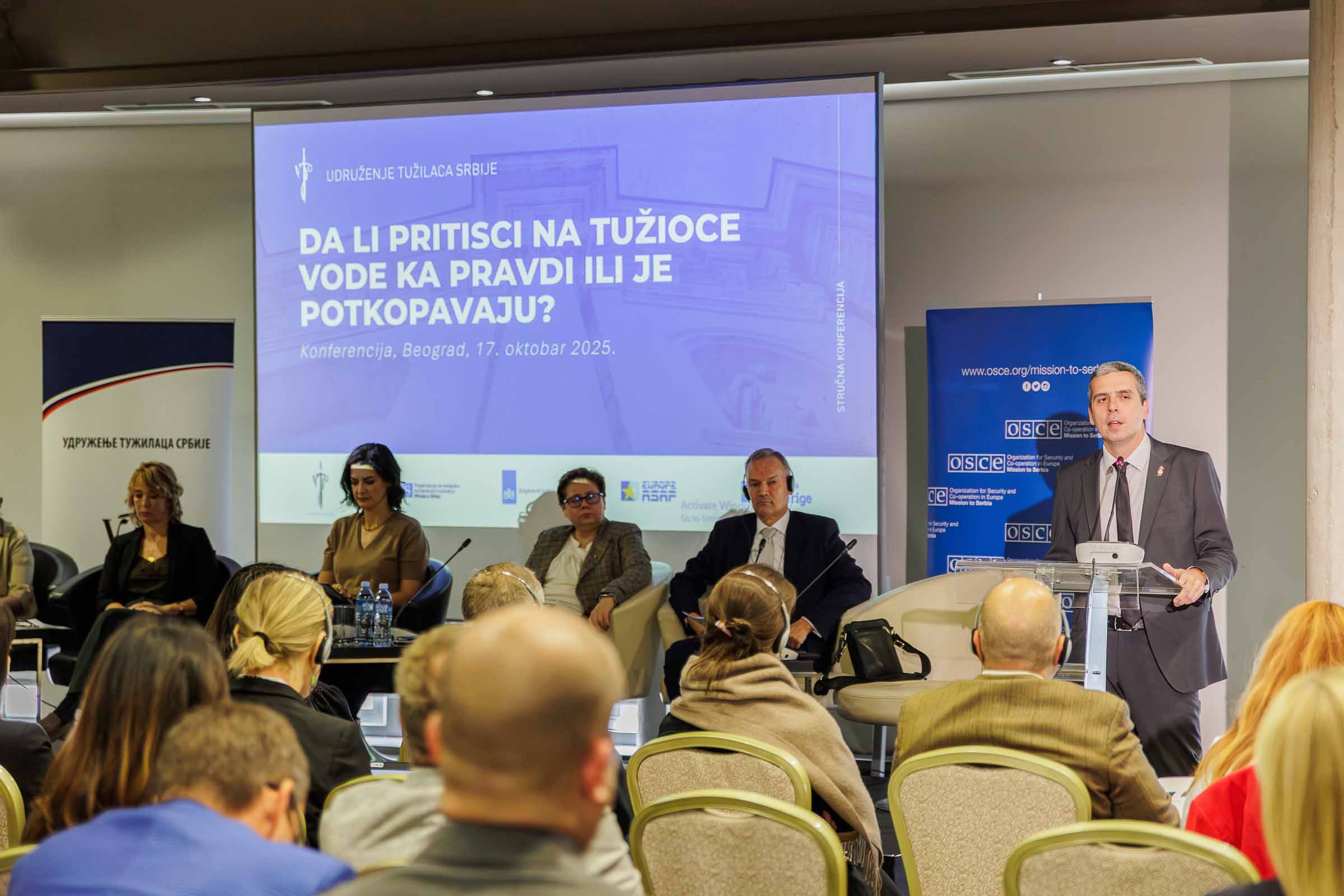
He recalled that the new prosecutorial laws have brought some positive developments, primarily that the sessions of the High Council are open to the public and can be watched live on the HPC YouTube channel, as well as that the competition for new public prosecutors is being accelerated because, out of the required 900, there are now 600.
Low public trust, prosecutors under pressure
His Excellency Martijn Elgersma, Ambassador of the Kingdom of the Netherlands, spoke in the opening session of the conference, as a long-standing donor to the PAS through programs dedicated to strengthening the rule of law. He recalled that the European Commission’s Rule of Law Report for Serbia states that “political pressure on the judiciary and prosecution remains high, with little or no response from the High Judicial Council and the High Prosecutorial Council, the Government or the Parliament.”
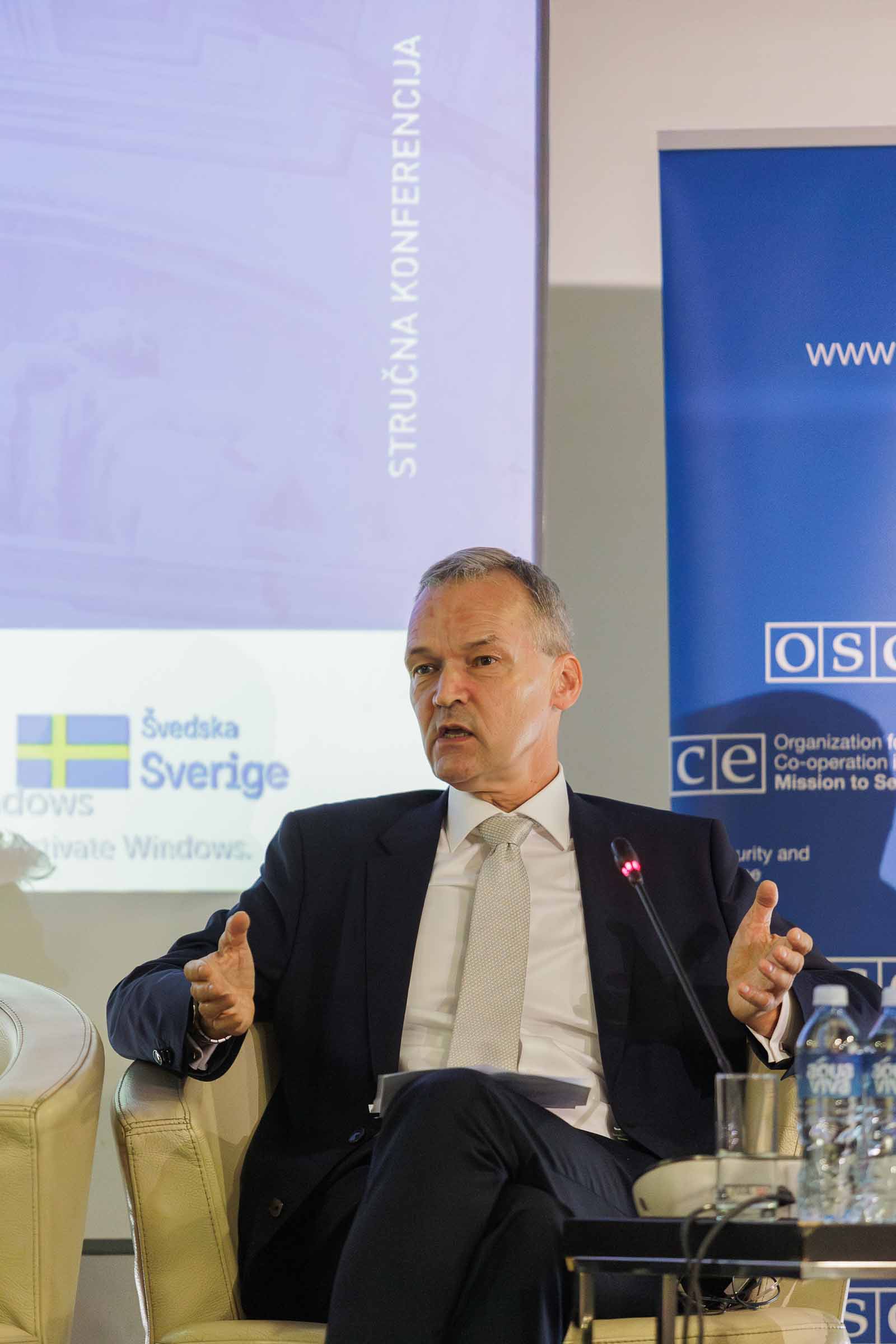
“This statement shows us that reforms that strengthen the independence of the judiciary and prosecutors are much more than changes to legislation and that laws must be implemented in practice,” His Excellency Elgersma said.
He told the participants that this year’s Rule of Law Report of European Commission also criticized the Netherlands, citing concerns that the executive branch, specifically the Minister of Justice, in certain cases instructs prosecutors to drop prosecutions. This suggests that even in the Netherlands, there is the possibility of political abuse of the judicial system, but in practice, the spirit of prosecutorial independence is so strong that the executive branch refrains from any interference.
Plamena Halacheva, Deputy Ambassador of the European Union to Serbia, said that our country has made progress in Chapters 23 and 24 relating to the rule of law and is working on harmonizing its legal framework with the EU acquis.
“However, despite positive steps, public trust in the independence of the judiciary is low. According to the Eurobarometer results from 2025, only 30 % of citizens and 36 % of the business community rate the independence of the judiciary as fair. Risks of politically motivated influence in cases of high corruption still persist,” she added.
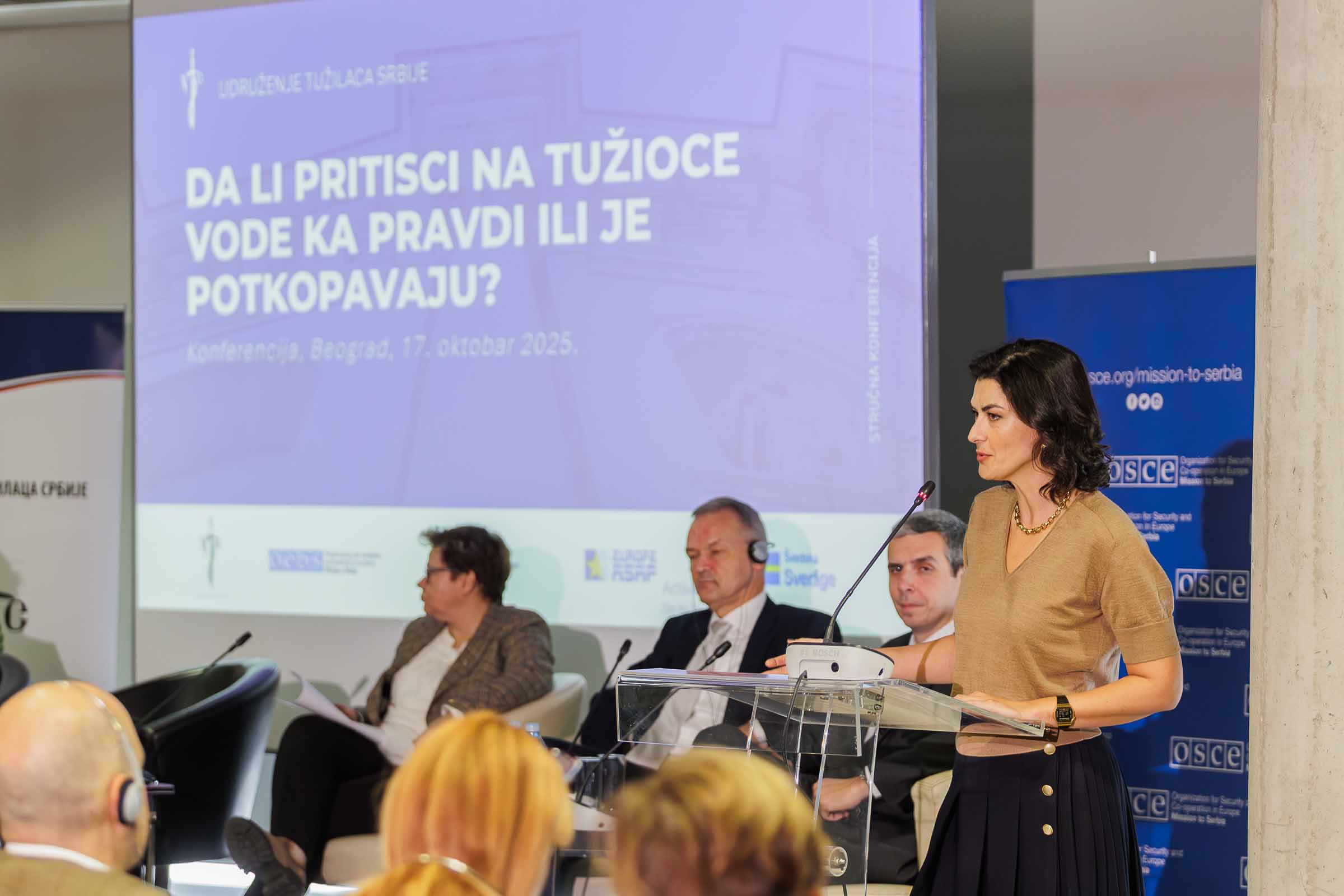
According to her, the High Judicial Council received five and the High Prosecutorial Council received ten requests for protection from undue influence by judges and prosecutors last year.
“The financial investigations launched earlier this year against several NGOs, following public statements by high-ranking officials, have further highlighted the need to strengthen the independence of the prosecution service,” Halacheva said. “Prosecutors are on the front lines of defending the rule of law and, together with judges, bear the responsibility to ensure justice and uphold democratic values.”
Ivana Ramadanović, Legal Advisor to the OSCE Mission to Serbia, and a good expert on the real situation in the prosecution and judiciary, reminded that the independence of prosecutors means that in their daily work, when deciding whether or not to prosecute suspects, they must have a sense of autonomy and freedom, as well as the knowledge that the law and institutions protect them from influence and pressure.
Prosecutors targeted by populists worldwide
Our comrades in the fight for the autonomy of prosecutors and the independence of judges are always our colleagues from the European Association of Judges and Prosecutors for Democracy and Freedom (MEDEL), an influential international organization that monitors the state of the rule of law in European countries.
Mariarosaria Guglielmi, President of MEDEL, was our guest and shared her insights with the participants: “The position of the public prosecutor in the institutional system of government is constantly being questioned, to the point that we can consider its status as systemically uncertain. In recent years, with the rise of populism, the public prosecutor – like the judiciary as a whole – has become the target of tireless attempts by rulers to limit its power and independence, through formal and informal strategies.”
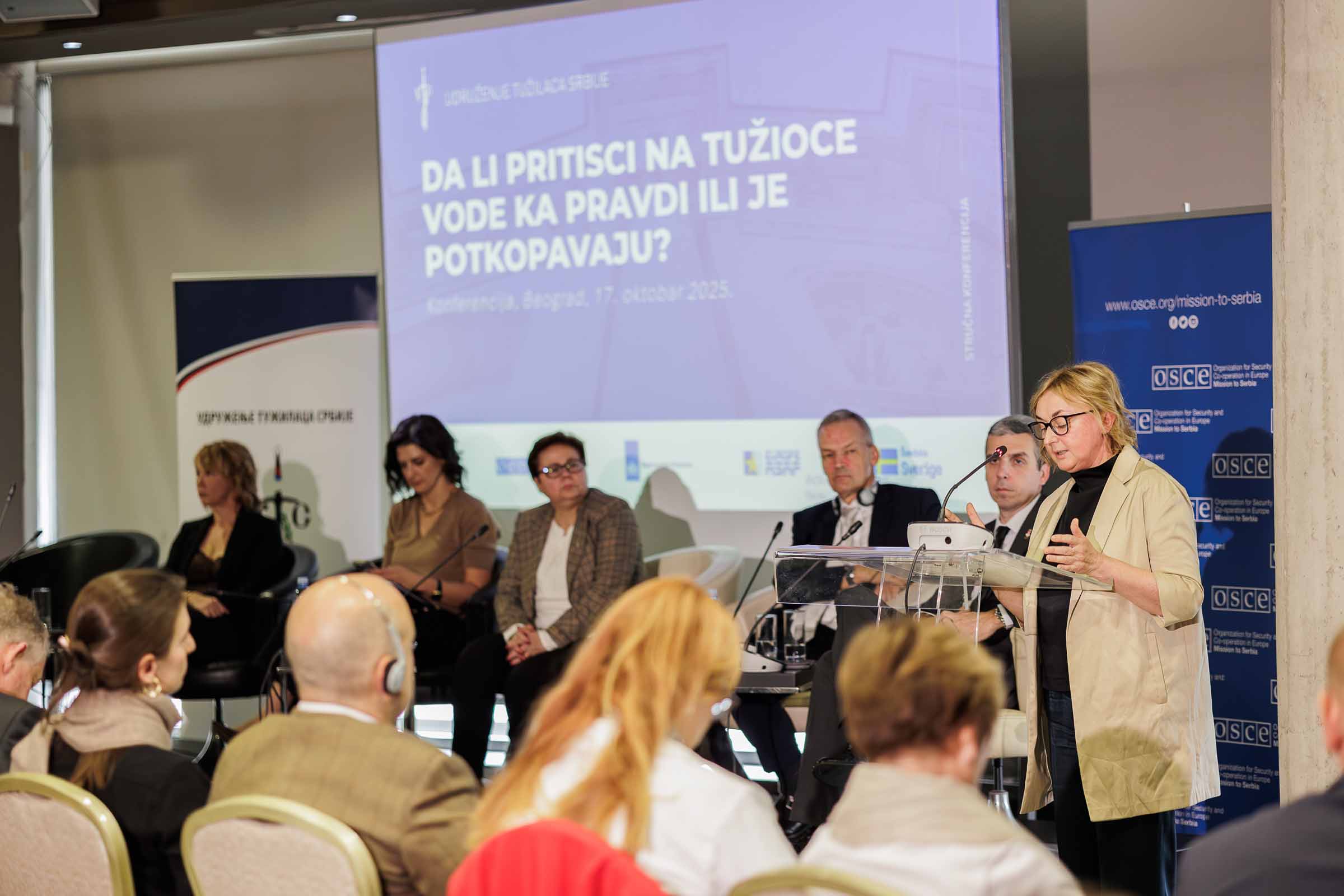
What we often talk about are the external pressure from the public, the media, and from statements by state officials, and it is also happening in European countries. The difference is in the level of legal culture as well as in the effectiveness of existing mechanisms for the protection of prosecutors.
“Prosecutors are often the first targets of populist rhetoric from politicians, which creates a distorted image of the judiciary and undermines citizens’ trust in its role. Judges and prosecutors are denied democratic legitimacy because they are not elected, like politicians. They are accused of playing a political role and making decisions against the will of the people. This often puts them and their families at risk,” Guglielmi explained.
She emphasized that it is important for prosecutors’ offices to develop open communication with the public, a message that was often mentioned by other speakers.
Slander in the media, pressure from the inside
The topic of the first panel was “Appearances of undue influence” and moderator of this discussion was our colleague, Mr. Goran Ilić, honorary President of PAS.
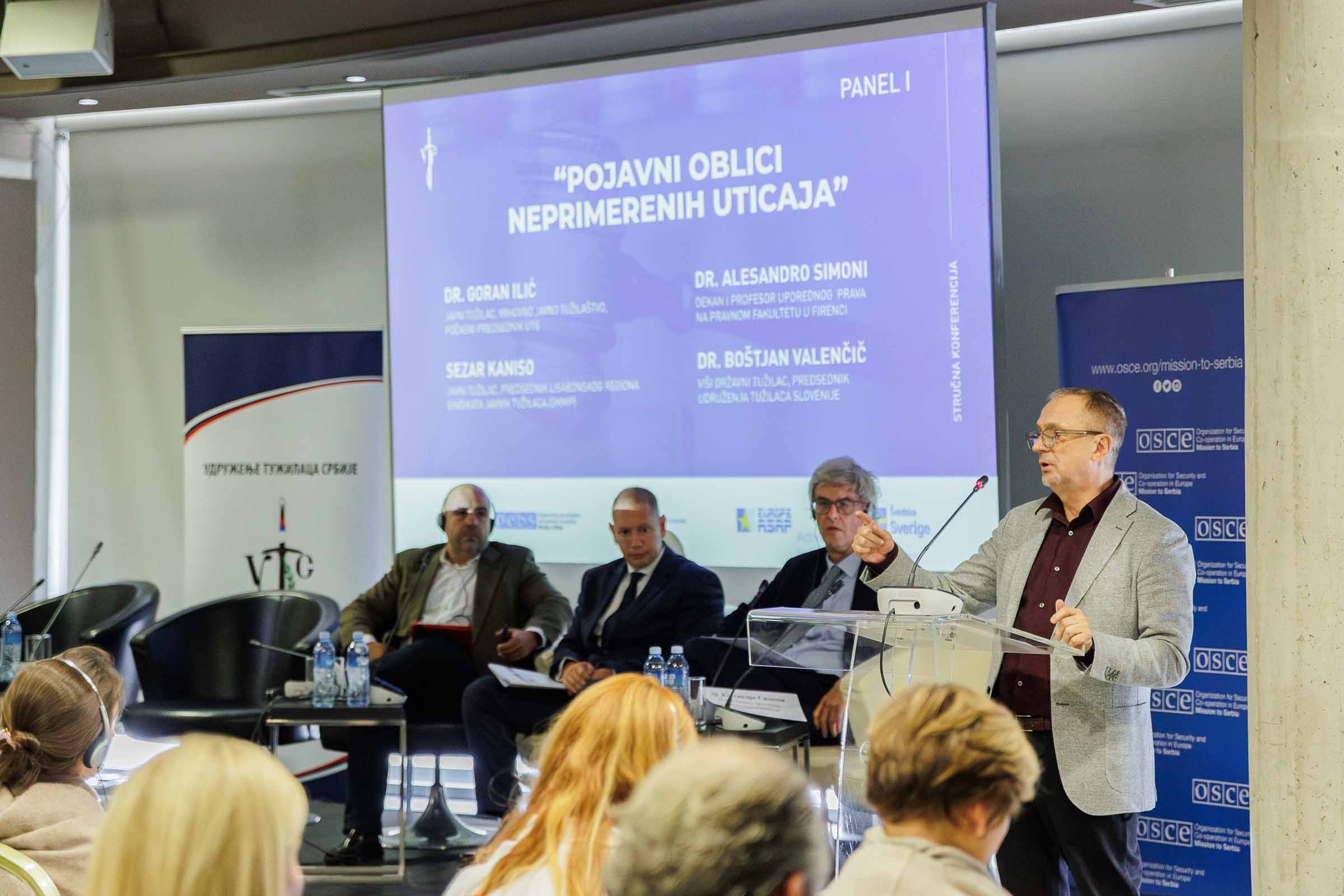
As usual, speaking very openly about the visible problems that prosecutors face, Prosecutor Ilić, a prosecutor at the Supreme Public Prosecutor’s Office, highlighted three forms of undue influence currently prevalent in Serbia: orchestrated defamatory campaigns against prosecutors and judges that are vindictive in nature, internal influence on the work of prosecutors by their superiors, and the third, new way, for individual prosecutors to have “their own portals and accounts on social networks through which they deal with dissenters in the public space.”
Alessandro Simoni, a prominent lawyer from Italy, Dean and Professor of Comparative Law at the Faculty of Law in Florence, spoke about the forms of organization of public prosecutor’s offices in different political and historical contexts.
“It is likely that in Italy, at this moment, the public prosecutor has the greatest freedom in relation to the authorities, in Europe, and one of the most important powers he has, which directly affects that freedom, is that he commands the judicial police,” he said.
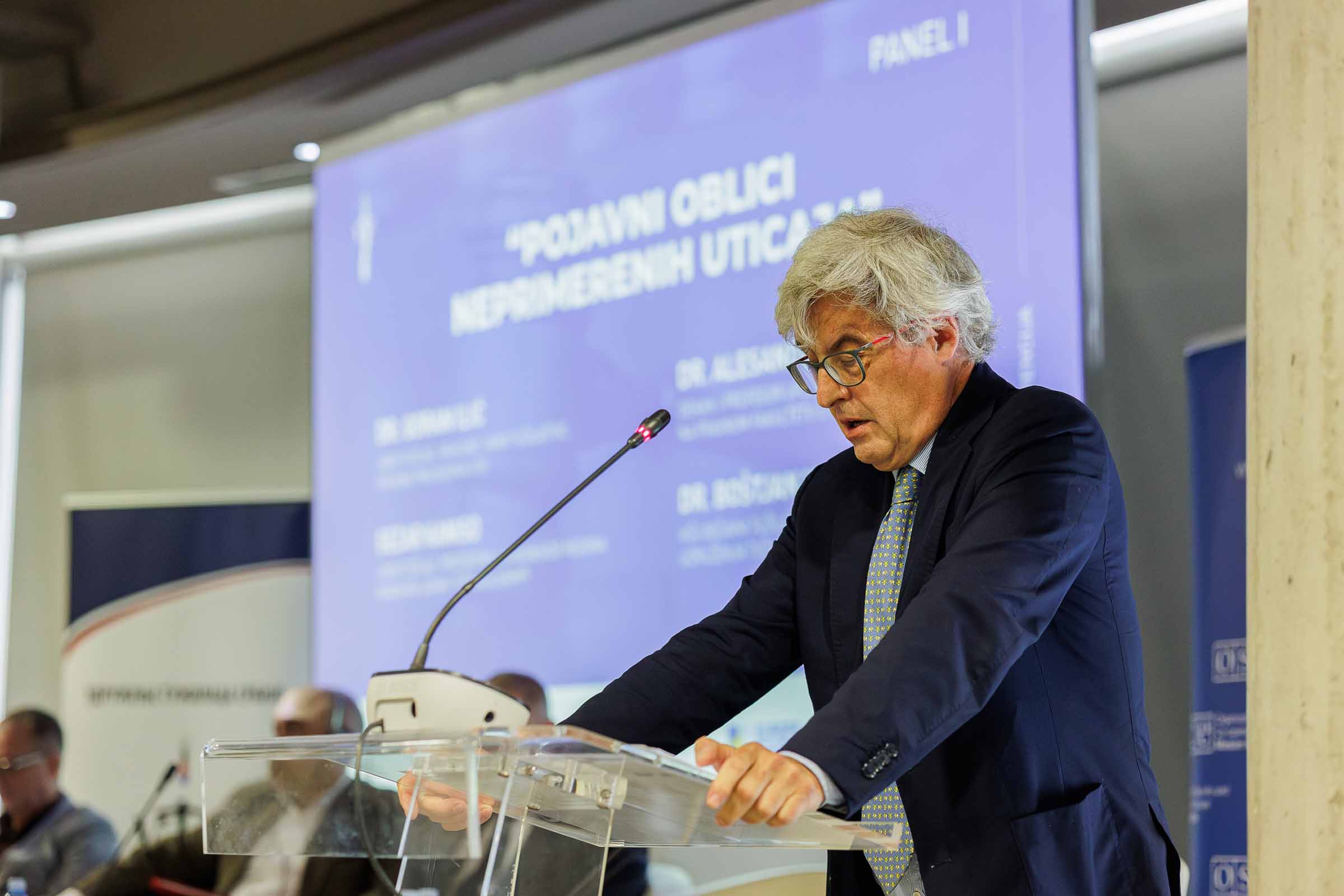
Italy is currently fighting a major battle for judicial independence because the constitutional reforms that the government is pushing for, according to critics of this proposal, threaten the independence of the judiciary as a whole.
Pressure, bribery, media attacks on prosecutors in Portugal and Slovenia
Cesar Canico, State Prosecutor from Portugal, a major union activist in the Lisbon Union of Public Prosecutors, spoke about the situation in this country. Similar to Ilić, Canico listed examples of undue influence and pressure on prosecutors.
“Political pressure is the most common form, it happens when government representatives try to influence prosecutorial decisions for their own political gain. Then there is the influence of the media, especially in cases that attract a lot of public attention, and information leaks occur. We also have direct threats and intimidation of prosecutors and finally, we have inappropriate disciplinary measures, when internal disciplinary proceedings are used to punish prosecutors,” Canico said.
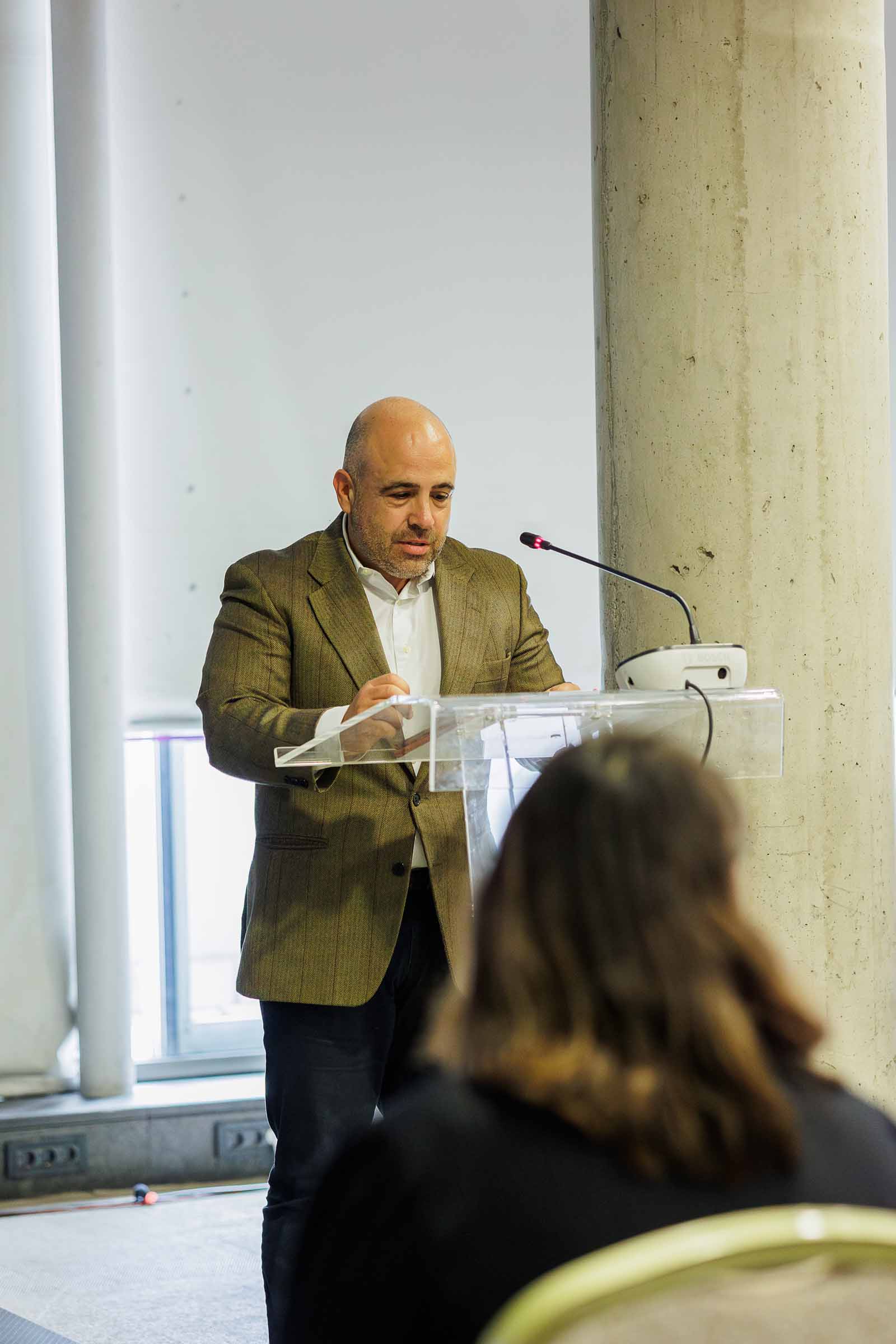
Sezar Kaniso
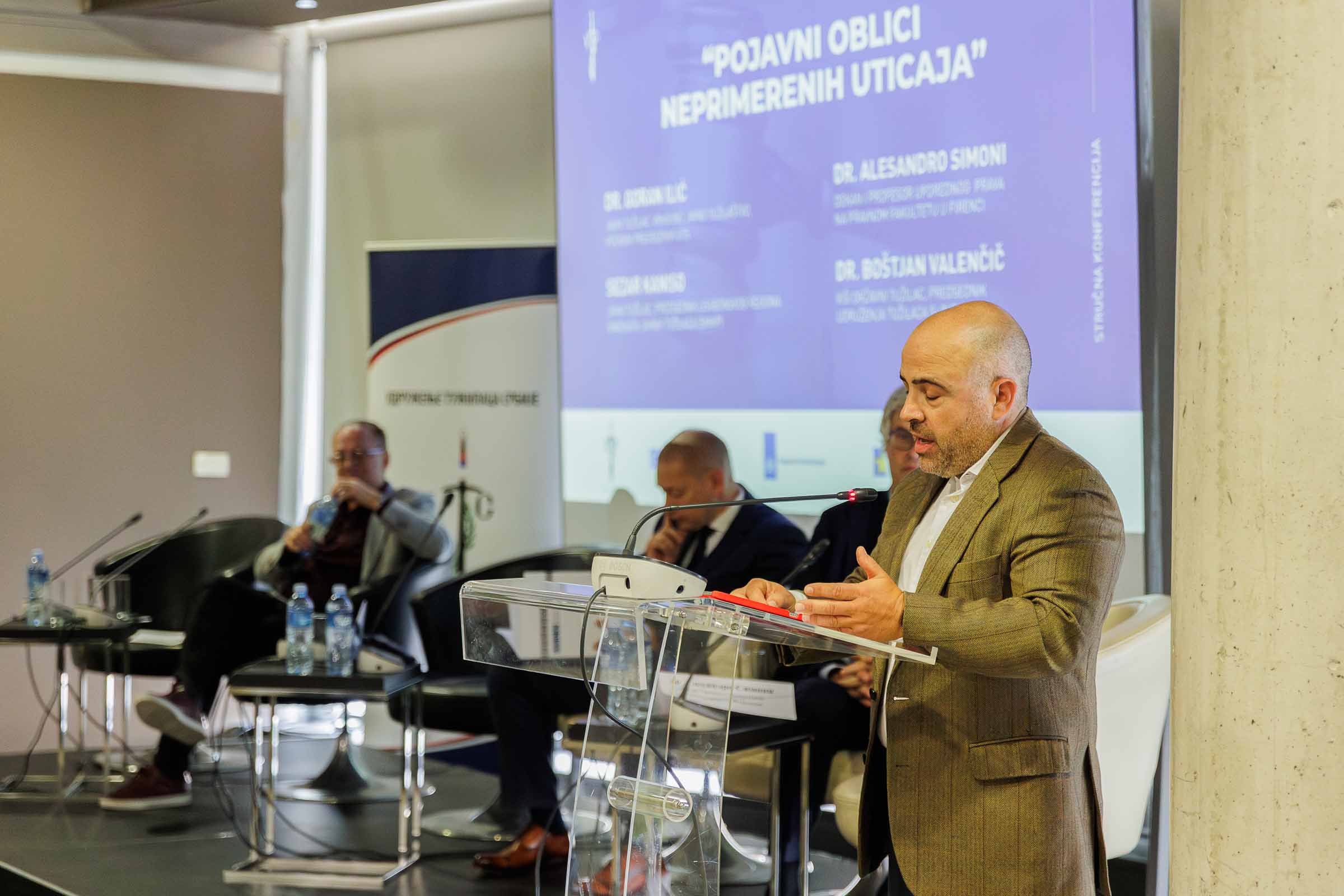
He brought all these types of pressure closer to the participants through a presentation of several of the largest cases in this country: “Casa Pia”, a case of sexual abuse of children in a state institution, then corruption in the case of the procurement of a submarine where 27 million euros were spent on bribes and pressure on prosecutors, then corruption in connection with the construction of a shopping mall, as well as the case of former Prime Minister Socrates, which related to corruption, fraud and money laundering and had enormous political and media significance.
“All these cases show the same pattern: When the prosecution launches investigations against powerful political or business people, there is an intensified political and media reaction,” Canico said.
Our colleagues from Slovenia, we work closely with, share similar problems, and this was discussed by our guest, Boštjan Valenčić, State Prosecutor, President of the Slovenian Prosecutors’ Association.
“In Slovenia, we are also witnessing numerous unacceptable pressures on the work of prosecutors, through the media and social networks, one of the most significant examples of which was the case of the former Prime Minister. Some of the consequences were the blocking of the appointment and promotion of prosecutors, public insults and finally, a reduction in salaries by around 30% during the pandemic,” he said.
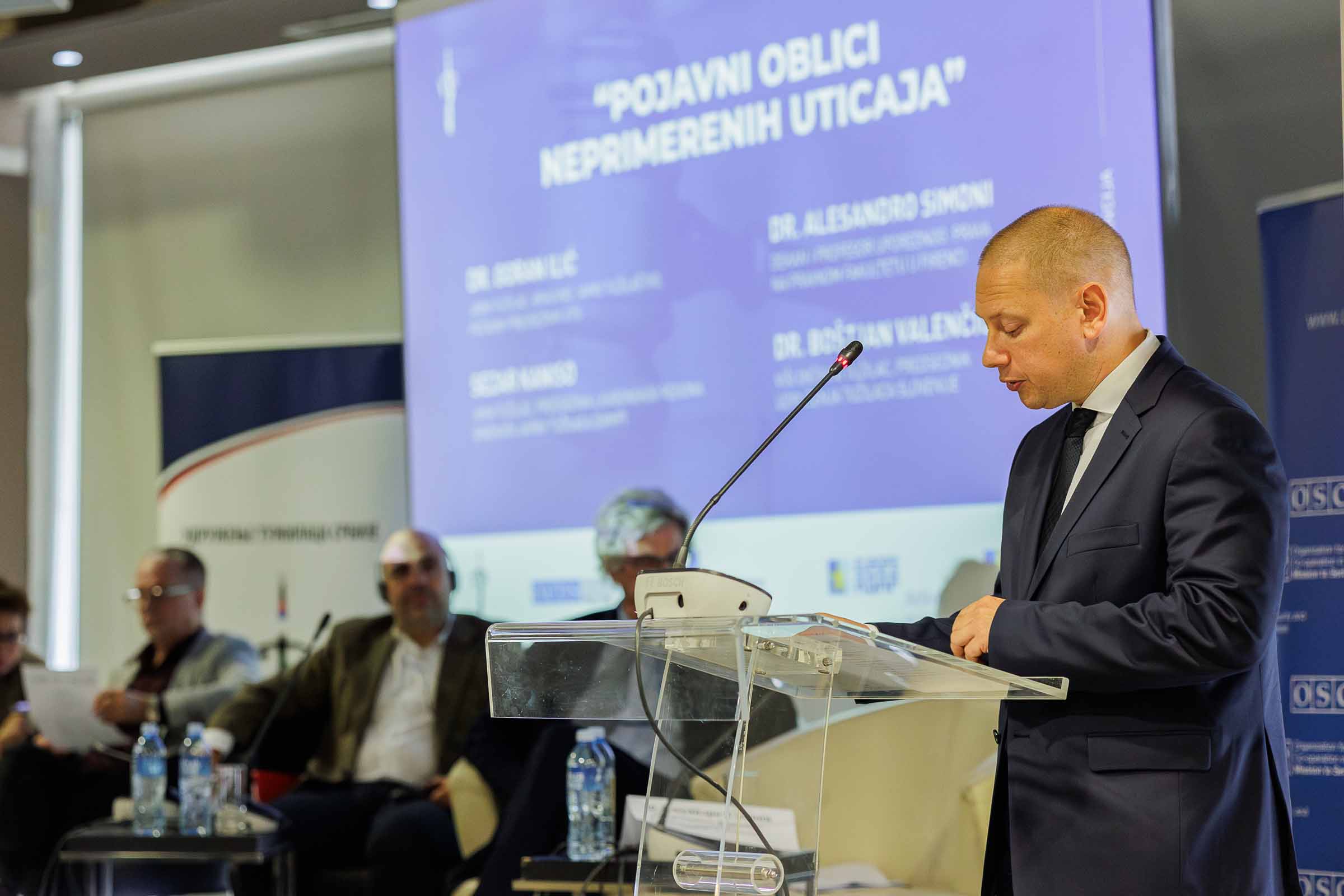
Slovenian colleagues, together with judges, organized a judicial strike, although, as he said at the conference, strikes by judges are not allowed by law. But this joint form of pressure resulted in the adoption of a new law that regulated prosecutors’ salaries in a fair manner.
Citizens do not know how the state works, education is needed
The second panel dealt with the question of what are the effective mechanisms for protection against undue influence and was led by our colleague Predrag Milovanović, a member of the HPC.
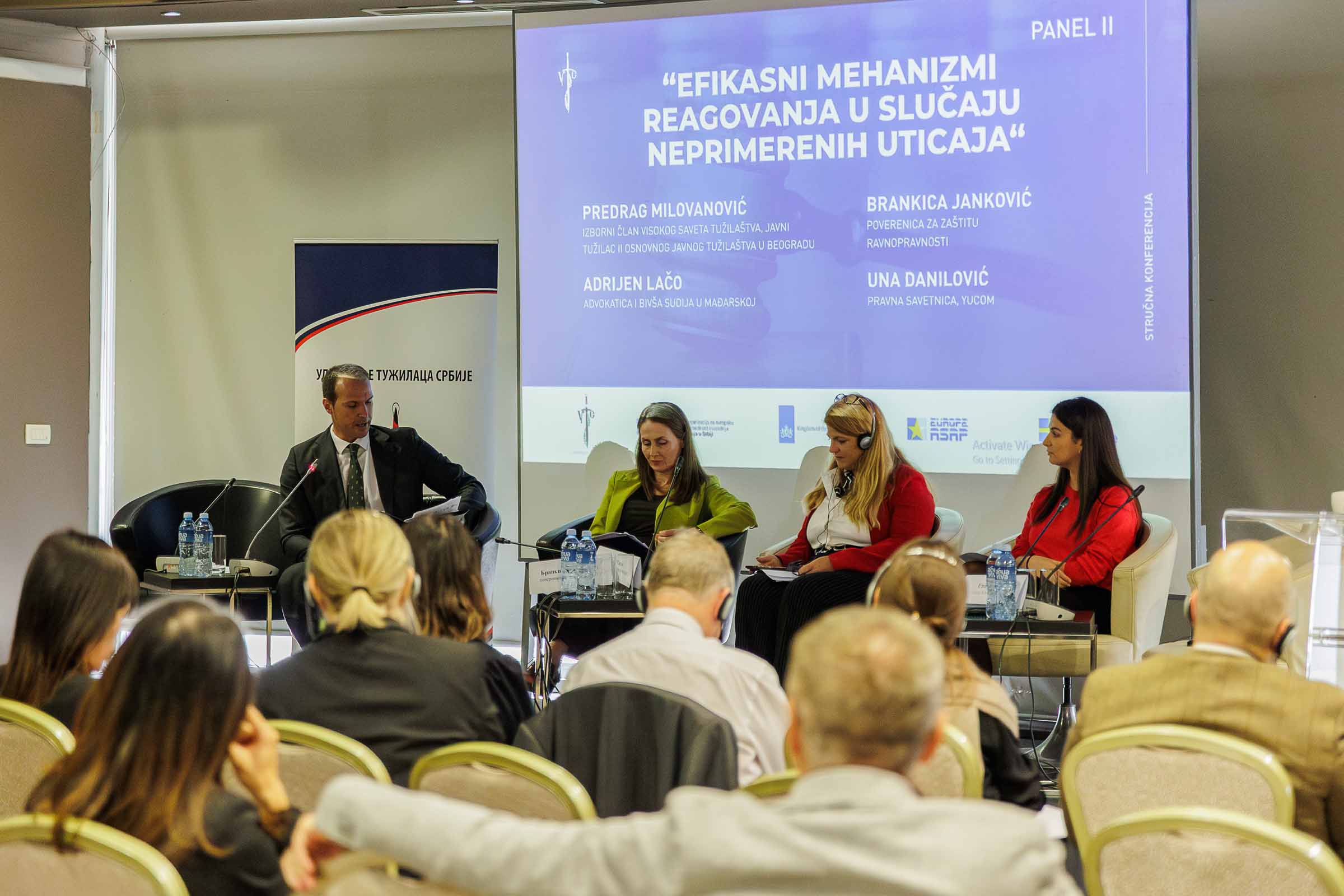
The role of this body is to protect the autonomy of the public prosecution service and, although there has been a lot of criticism of the results of its work on this issue, we have also heard that there have been six extraordinary sessions so far precisely due to complaints of undue influence.
Adrien Laczo, who was a judge in Hungary until last year and now is a lawyer, also shared her experiences from our neighborhood. She left the judicial position after 24 years of work.
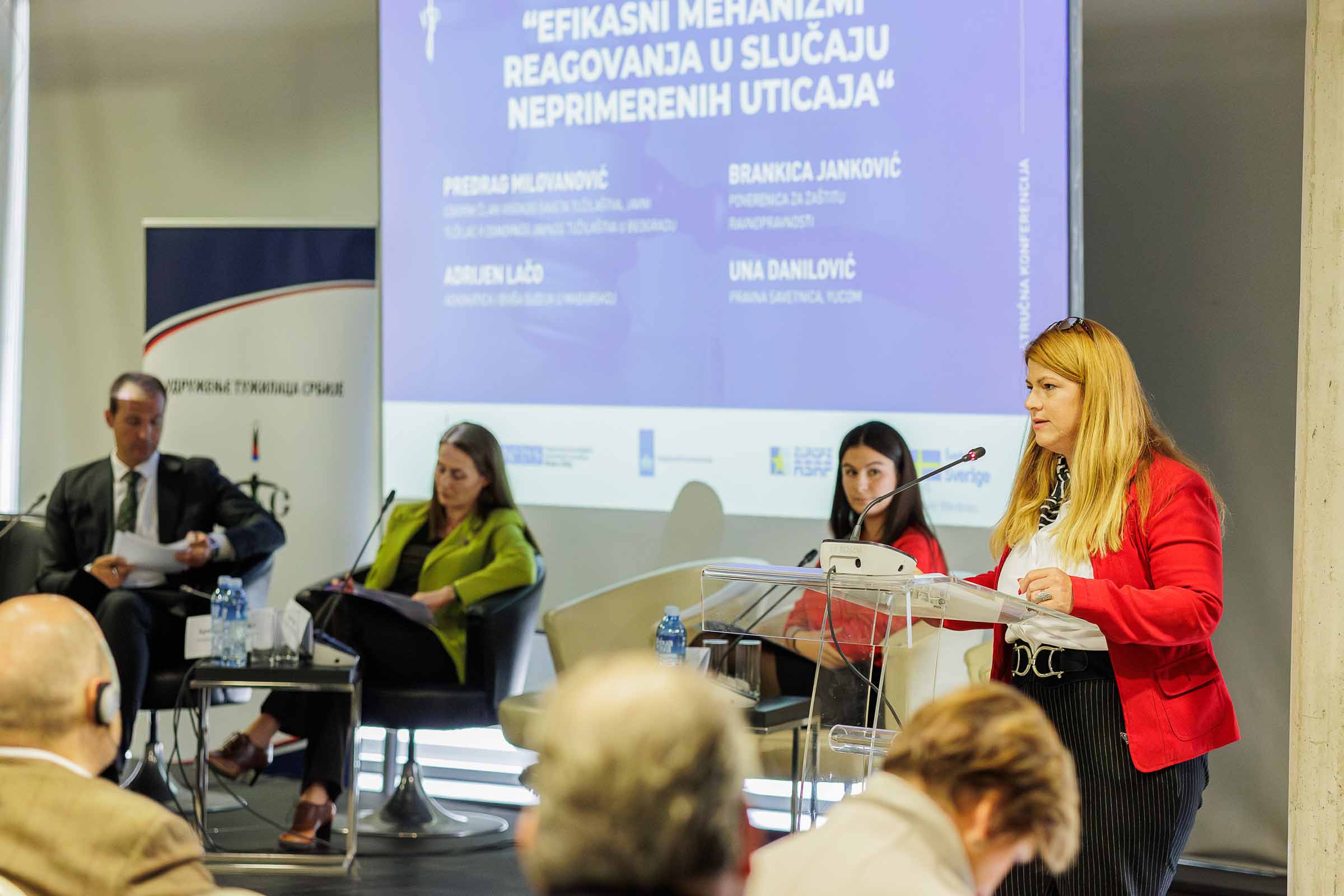
She explained that the Supreme Public Prosecutor in Hungary is a person elected by a two-thirds majority in Parliament and he is always the person who is in favor of the ruling majority. And the majority has been held by the Fidesz party of Prime Minister, Mr. Viktor Orbán for 15 years. The same applies to the President of the Supreme Court, so the two key figures in the Hungarian judiciary are directly influenced by the political majority in parliament.
“In my opinion, it is extremely important that judges and prosecutors communicate with the public as much as possible. There is not enough knowledge about the role of prosecutors and judges, such knowledge is not gained through education and citizens do not understand how the state functions,” Laczo said, who is also a co-founder of the Res Iudicata Association, which organizes lectures and visits to high schools and colleges to teach students about the separation of powers and what prosecutors and judges do.
Number of cases of undue influence on prosecutors and judges increases
Una Danilović from Yucom shared with us useful data on the number of undue influences that this organization observes and monitors.
During 2024, Yucom recorded 33 cases of external undue influence on the work of the prosecutor’s office, and this year, although we are not at the end yet, 40 cases have been registered. These are undue influences by public officials, from the president of the state, who is at the forefront of this, through Ministers and other officials.
They mainly comment on verdicts, violate the presumption of innocence, predict outcomes and, if they have data from the proceedings, they make them public and comment.
Brankica Janković, The Commissioner for Equality, reminded us that this body also suffers from numerous pressures and various forms of undue influence. She said that one of the creative ways of exerting pressure is giving “well-intentioned advice” or criticism. She mentioned that the work of the Commissioner’s office is extremely influenced by media writings, statements by politicians, and other things.
As a good protection mechanism, Janković pointed out professional association that can help colleagues who are under pressure.
“Prosecutors can turn to the Commissioner for Equality in cases of discrimination within the public prosecution organization, but we have not had such examples so far. We had two prosecutors announce that they would file charges for gender discrimination, but they withdrew,” Commissioner for Equality said.
She concluded that educated, emancipated and free prosecutors as well as educated, emancipated and free citizens who know how important the rule of law is are the best mechanism for protection against pressure on the judiciary.