Pressure on prosecutors comes from all sides – from the highest state officials, through defamatory media campaigns, and pressure within public prosecution offices from their superiors. The Commissioner for the Independence of Prosecutors, a body that was supposed to be the main safeguard of prosecutorial independence, provides no protection to colleagues and during this year, which is full of examples of pressure on the judiciary, has not made a single decision in that direction.
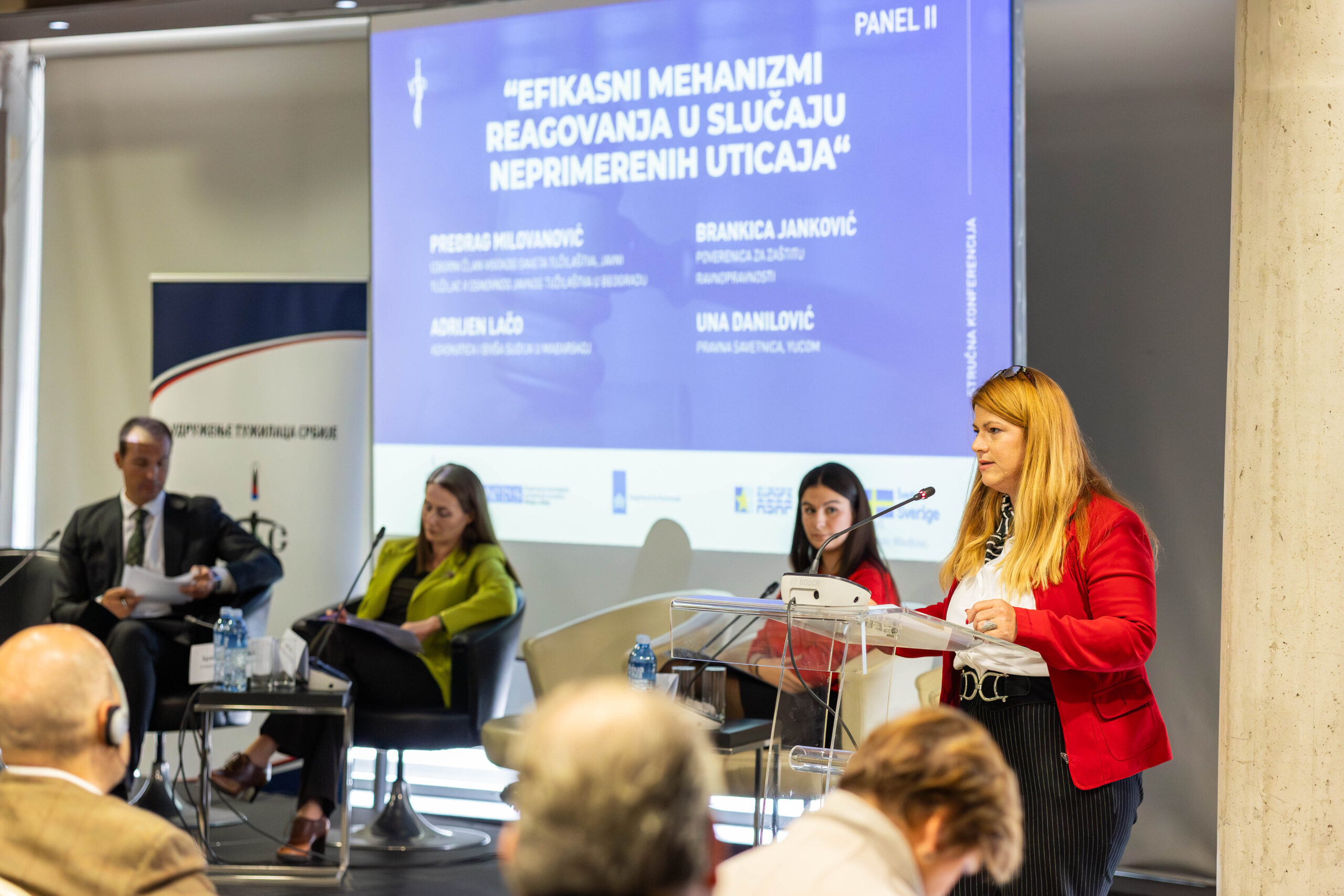
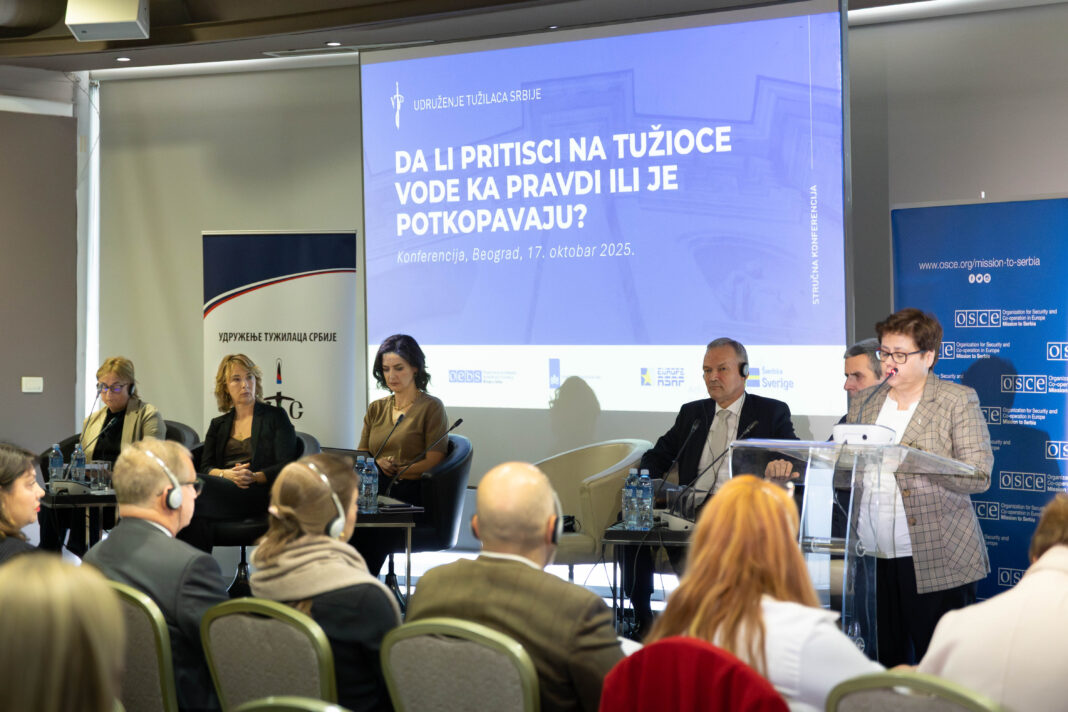
These are the main messages of the annual conference of the Prosecutors Association of Serbia (PAS), the oldest and largest professional organization of prosecutors in the country, held on Friday, October 17, 2025, under the title “Do pressures on prosecutors lead to justice or undermine it?”
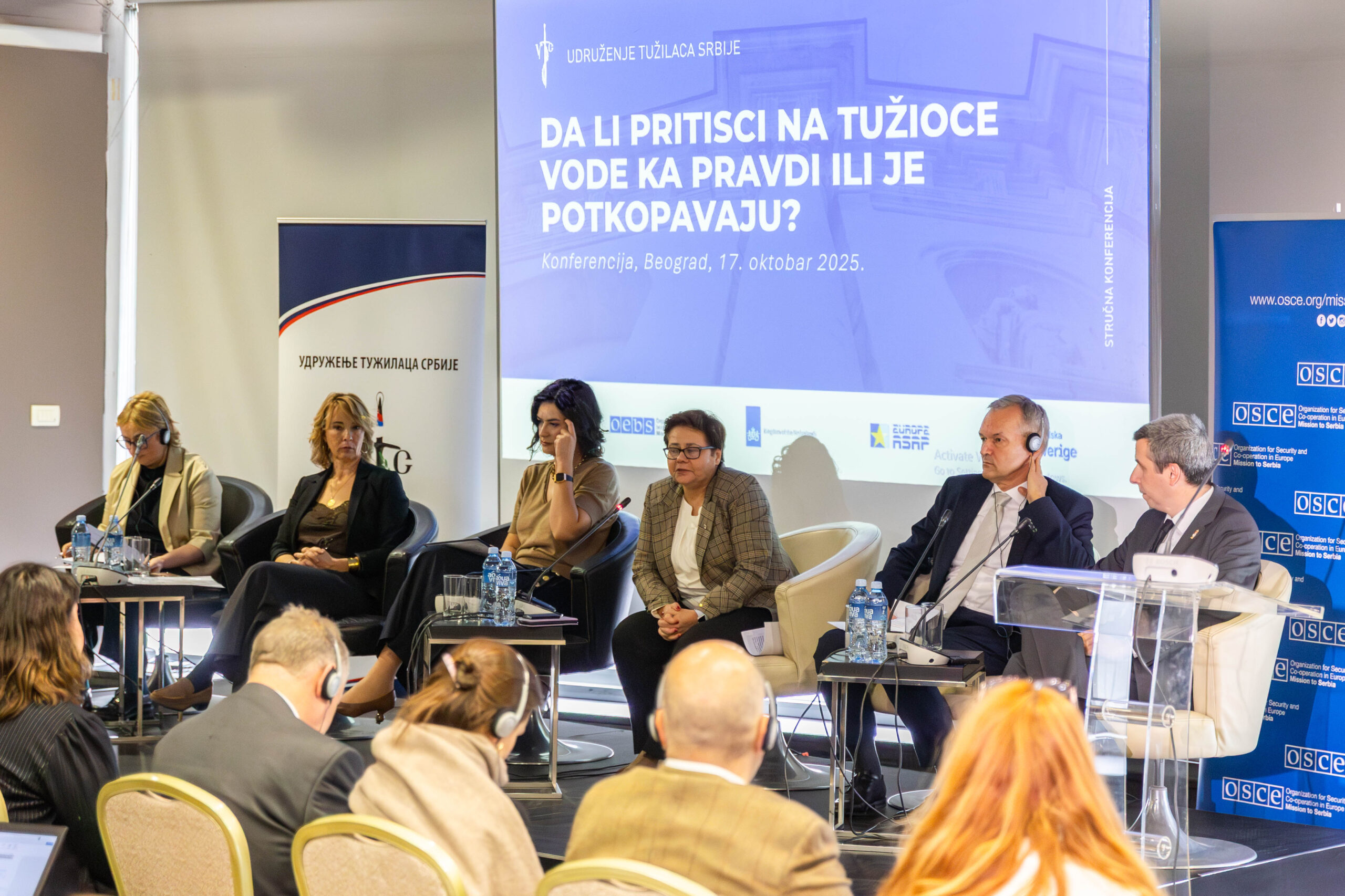
The President of the Association, Lidija Komlen Nikolić, reminded that Serbia, two years ago, as part of the EU integration process, adopted new prosecutorial laws and constitutional amendments aimed at reducing the influence of the legislative and executive branches on the judiciary, but that there are still no results, and that, one year after the Novi Sad tragedy, we are even further from that goal.
“The prosecution is like a wishing fountain; everyone expects something from us, citizens are dissatisfied, and so is the government. Open attacks on prosecutors have become a global trend, and pressure on the judiciary is becoming an almost acceptable phenomenon worldwide,” said Komlen Nikolić.
She referred to the election of prosecutors as members of the High Prosecutorial Council (HPC), to be held on December 23. She said that, for the first time, the campaign for the election of prosecutors has moved into the media, in a very inappropriate, tabloid manner.
“Prosecutors must fight for the freedom to vote in the elections for the High Prosecutorial Council, because if they fail, they will not be able to secure the freedom of citizens to vote in general elections,” emphasized Komlen Nikolić.
The Deputy President of the High Prosecutorial Council, Dr. Miroslav Đorđević, pointed out two positive results of the HPC’s work: sessions are open to the public, and the process of appointing new prosecutors has been accelerated since, at the beginning of his term, he found 600 of the required 900 prosecutors. However, he believes that the mechanisms for protecting prosecutorial independence have not been sufficiently used and that efforts should continue on “raising awareness about the freedom of prosecutors.” “I also imagine a prosecutor as someone like Eliot Ness, unbreakable, fighting for what he believes is right and having a system that protects him. But we need to continue working on that,” he said.
Goran Ilić, Public Prosecutor of the Supreme Public Prosecutor’s Office, speaking at the conference, pointed out three forms of undue influence currently affecting prosecutors in Serbia: orchestrated defamatory campaigns against prosecutors and judges that are retaliatory in nature, internal influence on the work of prosecutors by their superiors, and a third, new form — certain prosecutors operating “their own portals and social media accounts through which they confront dissenters in the public space.”
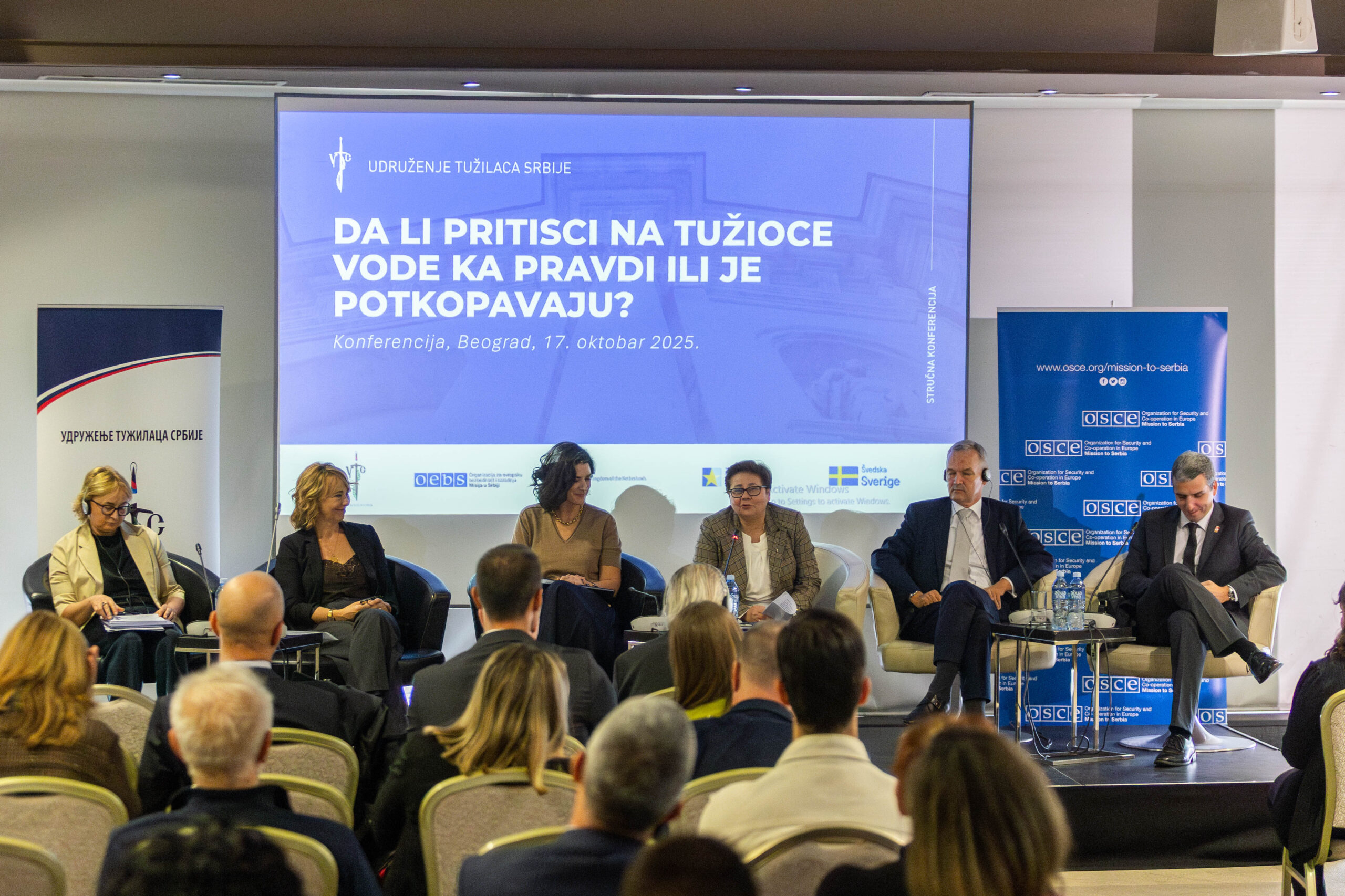
At the beginning of the conference, the Ambassador of the Netherlands to Serbia, His Excellency Martijn Elgersma, addressed the participants, noting that Serbia is not the only country that the European Commission criticizes in its rule of law reports and that the Netherlands itself has recently received such criticism. He agreed with the previous speakers that Serbia has good prosecutorial laws but stressed that implementation is key.
Plamena Halacheva, Deputy Head of the Delegation of the European Union to Serbia, said that, according to the EU Barometer survey, only 30 percent of citizens and 36 percent of the business community believe that trials in Serbia are fair.
Ivana Ramadanović, Legal Adviser at the OSCE Mission to Serbia, which has supported judicial reform in Serbia for two decades, reminded that prosecutors make daily decisions on whether to prosecute someone or not and that they should feel free and independent in their everyday work.
Mariarosaria Guglielmi, President of the European Association of Judges and Prosecutors for Democracy and Freedoms (MEDEL), of which PAS is a member, said that, with the rise of populism worldwide, there are more and more attempts to limit the power of prosecutors and that even Italy, her home country, is not free from such challenges.
This year’s conference had an international character, with prosecutors, lawyers, and former judges from Slovenia, Hungary, Italy, and Portugal also speaking about the issues of pressure on prosecutors.
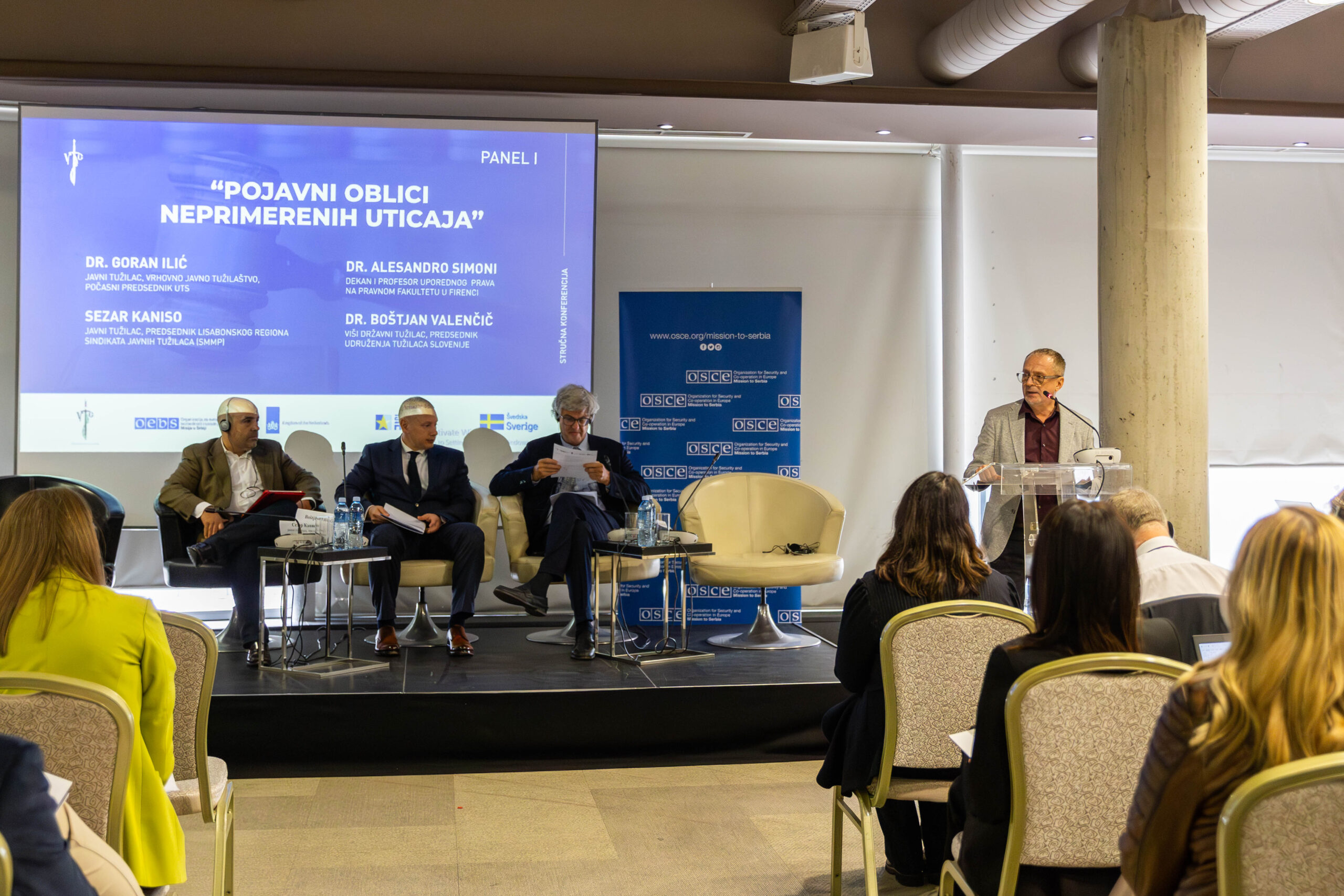
The panel discussion also featured Predrag Milovanović, elected member of the HPC and public prosecutor, and Brankica Janković, Commissioner for the Protection of Equality.